

In this case, group 1 consists of 200,000 shares deemed to have been outstanding from 1 January to 31 December. “Shares outstanding” also is a line in the data that is displayed with any stock quote. And so, for a loss-making company, potentially dilutive shares can be excluded if they are “anti-dilutive”. In other words, as in this example, those shares would not be counted if they improve results, which happens most frequently (though not invariably) when the company is not profitable.
Where Do I Find the Net Income Figure for the EPS Calculation?

Whether potential shares are considered anti-dilutive depends on the period. Company A might post a loss in the first quarter, and report a diluted share count of 100 million — but post a profit for the year, with a diluted share count more than twice as high. It also offered 3,000 shares to each of the two managing directors and has 5,600 treasury shares. Floating shares serve as a good representation of the company’s active shares or share turnover among various investors in the market, excluding parties holding substantial portions of equity. Therefore, if a company owns any diluting securities, that would indicate a potential increase in the number of shares outstanding in the future. Changes in shares outstanding over time also reveal how valuable shares are as a stake of ownership in the company, as the number of shares available directly affects this.
- For most companies, the number of authorized shares well exceeds the shares outstanding.
- Treasury shares plus outstanding shares together form the total number of issued shares.
- However, simply increasing outstanding shares isn’t a guarantee of success; companies must consistently deliver earnings growth to achieve sustained investor confidence.
- At any moment in time, a corporation has a specific number of shares that it has authorized for sale, to individual or institutional investors.
- The weighted average number of shares is determined by taking the number of outstanding shares and multiplying it by the percentage of the reporting period for which that number applies for each period.
- The weighted average shares outstanding represents the number of common shares outstanding, after adjusting for the share count changes that occurred throughout a given period.
- If you’re a market beginner, learning the ins and outs of stocks will help you get started trading, and making money.
What is Weighted Average Shares Outstanding?

Ask a question about your financial situation providing as much detail as possible. Our mission is to empower readers with the most factual and reliable financial information possible to help them make informed decisions for their individual needs. The articles and research support materials available on this site are educational and are not intended to be investment or tax advice.
Types of Stocks You Should Know
With the use of this earnings-per-share calculator, you will be able to assess their real value in just a few clicks. This tool will teach you how to calculate your earnings per share and provide you with a foolproof EPS formula. Note that if you find yourself trying to calculate weighted average manually, it will be easier — though less accurate — to work with durations stated in months. In that case, you would divide the number of months in each change in outstanding shares by the total months to arrive at the percentages in column D above. Suppose that Sample Company had 100,000 shares of common stock outstanding on 1 January 2021, that 20,000 shares were issued for cash on April 1, 2021, and that 12,000 shares were retired on 1 September 2021. Different scenarios for calculating the weighted average of outstanding shares are shown in the following examples.

How Do Stock Buybacks Influence Shares Outstanding?
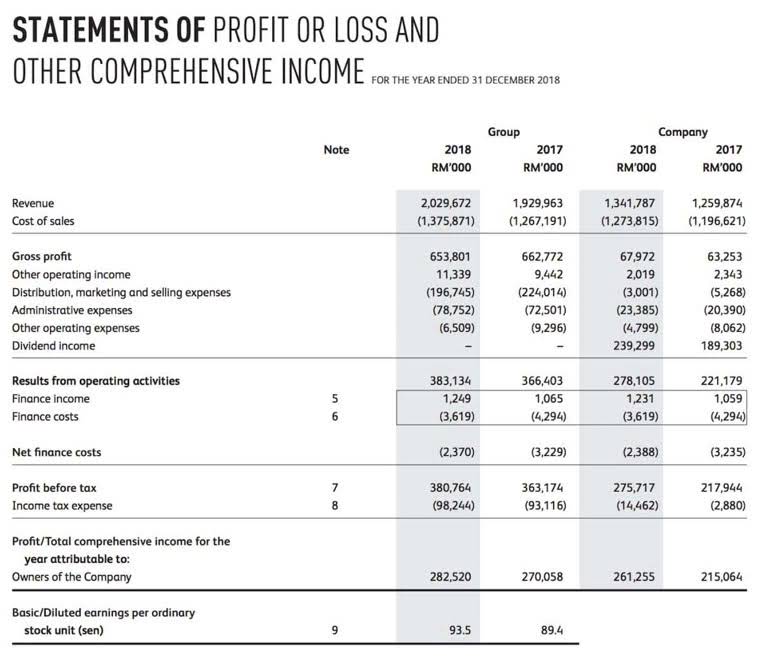
You can find shares outstanding at the top of a company’s 10-Q or 10-K filing. Importantly, the number of shares outstanding is dynamic and fluctuates over time. When you buy stock in a company, you are buying an ownership stake, which is issued as a share of stock. Here’s how to find out how many shares of a company’s stock are owned by all investors.
- Over the course of a reporting period—most often a fiscal year—the total number of common shares in circulation increases and decreases multiple times for most public companies.
- For example, a company might increase its dividend as earnings increase over time.
- Specifically, the number of actual shares outstanding must be altered to what it would have been if the split or dividend had occurred at the year’s start.
- This figure is important because it translates a company’s overall performance into per-share metrics, making an analysis much easier regarding a stock’s market price at a given time.
- Along with individual shareholders, this includes restricted shares that are held by a company’s officers and institutional investors.
Shares Outstanding in Financial Metrics
This refers to how many total shares the company has purchased back from investors. More specifically, treasury shares are the portion of shares that a company keeps in its treasury. Some companies’ balance sheets list the common shares how to calculate outstanding shares of common stock outstanding straight out. If that’s the case, congratulations, you don’t need to do any calculations. But usually you will need to pull several numbers from the balance sheet in order to calculate the total outstanding shares formula.
- Weighted averages are also used in other aspects of finance including calculating portfolio returns, inventory accounting, and valuation.
- Outstanding shares represent the number of a company’s shares that are traded on the secondary market and, therefore, are available to investors.
- Volatility profiles based on trailing-three-year calculations of the standard deviation of service investment returns.
- When this takes place, a company’s outstanding shares increase, and a higher degree of liquidity results.
Calculating Weighted Average Number of Shares
It’s worth noting that a company’s basic number of shares outstanding can differ from its fully diluted number of shares. The fully diluted number of shares indicates how many outstanding shares there could potentially be if all existing equity instruments were converted into common stock. Alternatively, the total number of shares outstanding can be easily calculated as a company’s market capitalization divided by the current share price. While shares outstanding account for company stock that includes restricted shares and blocks of institutional shares, floating stock specifically refers to shares that are available for trading. Floating stock is calculated by taking outstanding shares and subtracting restricted shares. Restricted stock are shares that are owned by company insiders, employees and key shareholders that are under temporary restriction, and therefore cannot be traded.
Which of these is most important for your financial advisor to have?
The inputs you’ll need for this calculation are located on the balance sheet. Yarilet Perez is an experienced multimedia journalist and fact-checker with a Master of Science in Journalism. She has worked in multiple cities covering breaking news, politics, education, and more. Get instant access to video lessons taught by experienced investment bankers.